
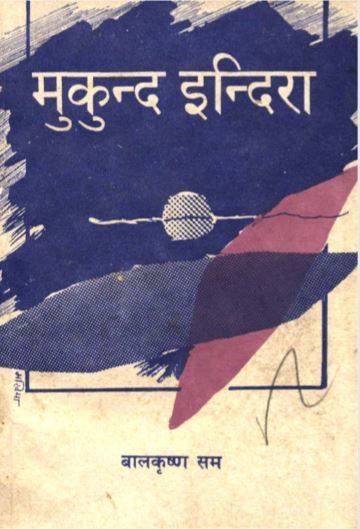
Mukunda Indira
मुकुन्द इन्दिरा (नाटक)
Mukunda Indira unfolds as an intimate psychological drama centered on two emotionally intertwined individuals—Mukunda, a sensitive, principled man, and Indira, a graceful yet deeply conflicted woman. Their relationship is shaped by affection, restraint, and the unspoken tensions created by social expectations and personal duty.Mukunda, torn between his inner desires and the moral responsibilities he feels toward his surroundings, struggles to articulate the depth of his feelings. His emotional world is quiet but intense, marked by hesitation, self‑discipline, and a fear of disrupting the fragile balance of life around him. Indira, equally burdened, carries a profound longing for connection but is constrained by circumstance, societal norms, and her own sense of obligation. Her emotional vulnerability becomes the central force that drives the drama forward.As the story progresses, their interactions reveal layers of suppressed affection, moral conflict, and psychological fragility. Sama uses lyrical dialogue and symbolic imagery to portray how love becomes both a sanctuary and a source of suffering. The environment around them—social expectations, familial pressures, and the rigid codes of propriety—tightens like an invisible boundary, preventing their relationship from reaching fulfillment.The drama intensifies as Mukunda and Indira confront the consequences of their silence and restraint. Their emotional worlds begin to collapse under the weight of duty, leading to a tragic realization: that genuine human connection often remains unattainable when society demands sacrifice over personal truth.The play concludes with a poignant sense of inevitability. Mukunda and Indira’s story becomes a reflection of the broader human condition—how love, when confined by fear and obligation, transforms into quiet sorrow. Through this tragedy, Sama establishes Mukunda Indira as a cornerstone of modern Nepali theatre, celebrated for its psychological depth, poetic realism, and profound exploration of human emotion.
—
—
—
0
Synopsis
Mukunda Indira unfolds as an intimate psychological drama centered on two emotionally intertwined individuals—Mukunda, a sensitive, principled man, and Indira, a graceful yet deeply conflicted woman. Their relationship is shaped by affection, restraint, and the unspoken tensions created by social expectations and personal duty.
Mukunda, torn between his inner desires and the moral responsibilities he feels toward his surroundings, struggles to articulate the depth of his feelings. His emotional world is quiet but intense, marked by hesitation, self‑discipline, and a fear of disrupting the fragile balance of life around him. Indira, equally burdened, carries a profound longing for connection but is constrained by circumstance, societal norms, and her own sense of obligation. Her emotional vulnerability becomes the central force that drives the drama forward.
As the story progresses, their interactions reveal layers of suppressed affection, moral conflict, and psychological fragility. Sama uses lyrical dialogue and symbolic imagery to portray how love becomes both a sanctuary and a source of suffering. The environment around them—social expectations, familial pressures, and the rigid codes of propriety—tightens like an invisible boundary, preventing their relationship from reaching fulfillment.
The drama intensifies as Mukunda and Indira confront the consequences of their silence and restraint. Their emotional worlds begin to collapse under the weight of duty, leading to a tragic realization: that genuine human connection often remains unattainable when society demands sacrifice over personal truth.
The play concludes with a poignant sense of inevitability. Mukunda and Indira’s story becomes a reflection of the broader human condition—how love, when confined by fear and obligation, transforms into quiet sorrow. Through this tragedy, Sama establishes Mukunda Indira as a cornerstone of modern Nepali theatre, celebrated for its psychological depth, poetic realism, and profound exploration of human emotion.