


Phoebe Shrestha
@a16d1e85-f1f5-4cce-b24b-c4ccb2855efd · Musicians & Instrumentalists, Violinist
Phoebe Shrestha is a Nepali violinist known for her expressive bowing style, refined classical technique, and ability to blend Western orchestral sensibilities with contemporary Nepali music. Active in studio sessions, live ensembles, and collaborati...
Biography
Phoebe Shrestha is a Nepali violinist known for her expressive bowing style, refined classical technique, and ability to blend Western orchestral sensibilities with contemporary Nepali music. Active i...
Personal Info
Career Highlights
1
Films
—
Awards
4 yrs
Experience
—
Rating
Similar Artists
Artists you might also like

Shila Bahadur Moktan is a veteran Nepali music director, arranger, composer, and multi‑instrumentalist, celebrated for more than five decades of contribution to Nepali music. He is regarded as one of the most respected figures in modern and folk‑influenced Nepali music, known for his refined arrangements, melodic sensibility, and mastery of multiple instruments.Born and raised in Darjeeling, he received formal classical training under J.C. Rai, which shaped his foundation as a composer and instrumentalist. His first recorded song, “Aakha Kahile Najudos,” was broadcast on All India Radio, Kurseong, in the 1980s .Shila Bahadur Moktan has contributed to over 1,200 songs, working as a composer, arranger, and instrumentalist across genres ranging from folk to adhunik Nepali music. His notable early works include folk songs such as “Hoina Maile Dhakeko Badulki Lageko” and “Topi Hataile Bunera,” and the modern classic “Kahile Kahi Malai Pani Herideuna Pharkera,” a song that introduced both Kunti Moktan (vocals) and Shila Bahadur (music) to the Nepali music scene .He is married to legendary singer Kunti Moktan, and together they are considered pillars of Nepali music. Their daughters Subani Moktan and Shital Moktan are also successful musicians, continuing the family’s artistic legacy .After retiring from Music Nepal, Shila Bahadur initially planned to step back from active work, but his passion for music kept him fully engaged in composing, arranging, and performing. He continues to appear in concerts, including the Paleti Series, where he performs his own compositions and vocals .With nearly 50 years in music, he remains an influential figure whose arrangements, compositions, and instrumental work have shaped generations of Nepali music lovers.
Shila Bahadur Moktan
Music Director, Music Arranger, Musicians & Instrumentalists
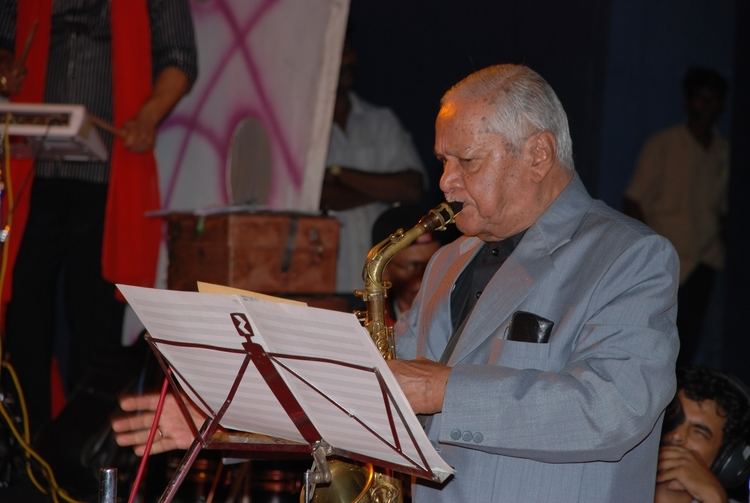
Manohari Singh (1931–2010), born in Kolkata to a Nepalese Bhusal family, is celebrated as one of South Asia’s finest woodwind and orchestral arrangers. Though globally known for his work with R.D. Burman, his Nepali heritage and musical upbringing in a Nepali household shaped his tonal sensibility, melodic phrasing, and emotional depth — qualities that strongly resonated with Nepali film composers.His mastery of alto saxophone, flute, piccolo, clarinet, mandolin, and bansuri made him a sought‑after session musician whose sound influenced the orchestral palette of Nepali film music in the 1980s–1990s. Many Nepali composers — especially those working in Mumbai and Kolkata studios — relied on his phrasing style, brass‑woodwind layering, and melodic counterlines as a reference point.Although he did not score many Nepali films directly, his arrangement style, brass band roots, and Nepali musical lineage helped shape the cross‑border sound that Nepali cinema adopted during its modern era. His work as part of the Basu–Manohari duo also inspired Nepali arrangers who studied Indian studio orchestration.
Manohari Singh
Music Director, Musicians & Instrumentalists

Buddha Lama is a musically talented young personality. He used to keep peoples spellbound by playing popular folk tunes in flute from his childhood. He came to Kathmandu for his further theoretical & practical courses in flute after finishing his schooling. In Kathmandu , he met flute instructor Jeevan Ale. Then he started both theoretical & practical classes in classical music. During his learning period he came to know from his instructor that no one can make flutes professionally in Nepal and it was hard to get even a perfect scaled flute in Nepal . People had to go to India to get a perfect flute. One day he determined to make flute himself in Nepal and after few years of his study he succeeded. Now world renowned flute-maestro from Nepal like Prem Ran Autari from ‘Sur Sudha' band, Himalayan Flutist Manose Sing, Pancha Lama from Chautari band and other well-known flutists are using flutes made by him. He also supplies his flutes in USA, Japan, Switzerland and other countries. All the effort he puts in result in quality flutes that have a massive and ever increasing demand abroad. He is pleased with this and plans to further improve the quality and as well address a wider market thus helping spread the melodious tune of flutes all around the world.
Buddha Lama
Musicians & Instrumentalists, Flautist
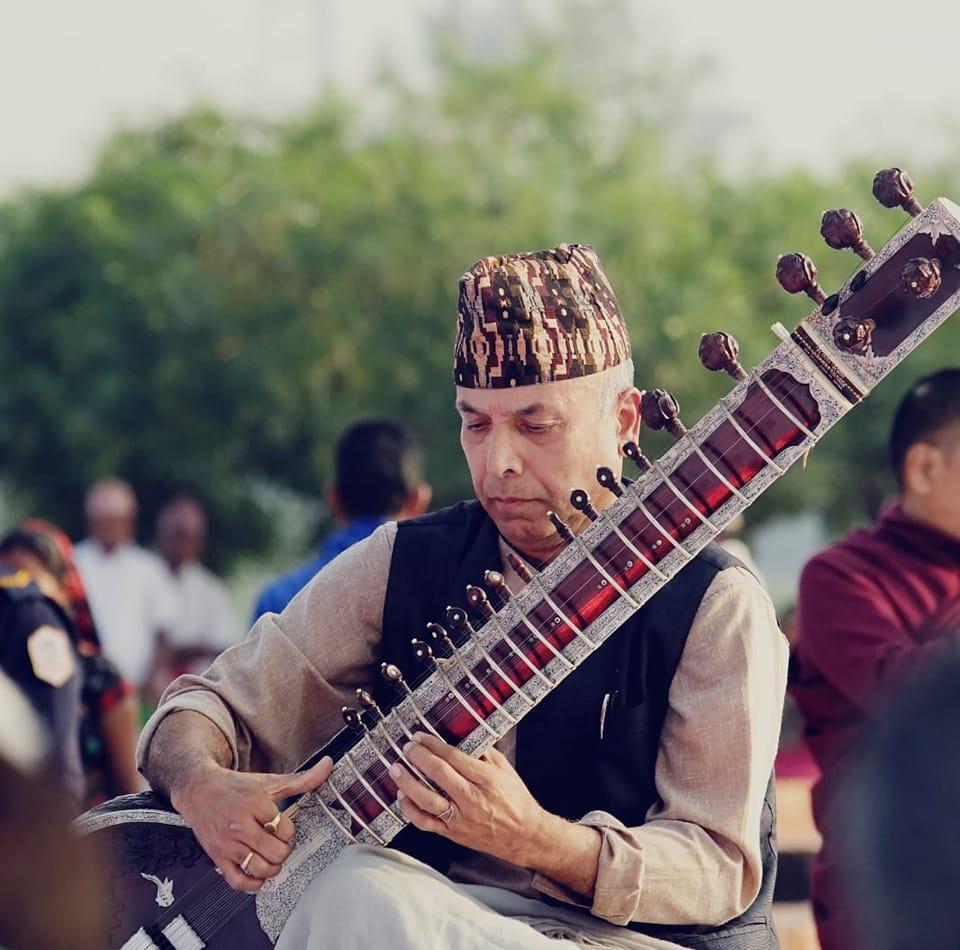
Dhrubesh Chandra Regmi is a celebrated sitar maestro, scholar, and academician from Nepal, known for his profound contributions to classical music and musicology. Born into the illustrious Regmi musical lineage, he is the great-grandson of Pt. Dev Chandra Regmi, who pioneered the sitar tradition in Nepal. Trained under his father, Prof. Satish Chandra Regmi, Dhrubesh began playing sitar at the age of eight and gave his first concert by thirteen. He holds a Ph.D. in Music from Delhi University—the first Nepali musician to do so—with a dissertation on the history of music during the Rana period. He also completed a postdoctoral Fulbright fellowship at the City University of New York on “Music for Peace and Harmony.” A founding member of the acclaimed ensemble Sukarma, Dhrubesh has performed globally and currently serves as a Professor at Padma Kanya Multiple Campus, Tribhuvan University. His legacy bridges tradition, scholarship, and performance.
Dhrubesh Regmi
Music Artists, Musicians & Instrumentalists, Music Instructor